MOTION

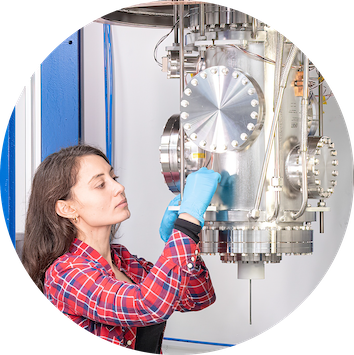
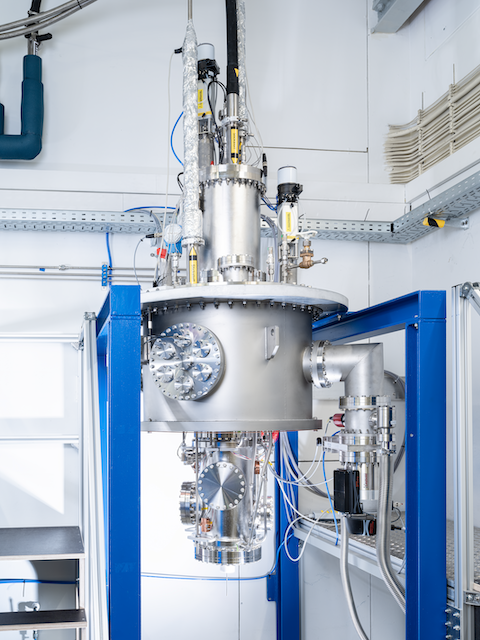
MOTION is a time projection chamber with 70 kg of liquid xenon, serving as a testing platform for high-voltage delivery of around -200 kV and stability in LXe for next-generation dark matter detectors, specially XLZD. The objective of this detector is to study the breakdown voltage of liquid xenon, which might depend on different factors such as surface area of the conductor and the purity of the liquid xenon, among others. The detector also serves as a platform to study spurious electron emission from electrodes, as well as the development of high voltage feedthroughs made out exclusively of radiopure materials.

Learn more

Relic neutrino capture in the KATRIN tritium source

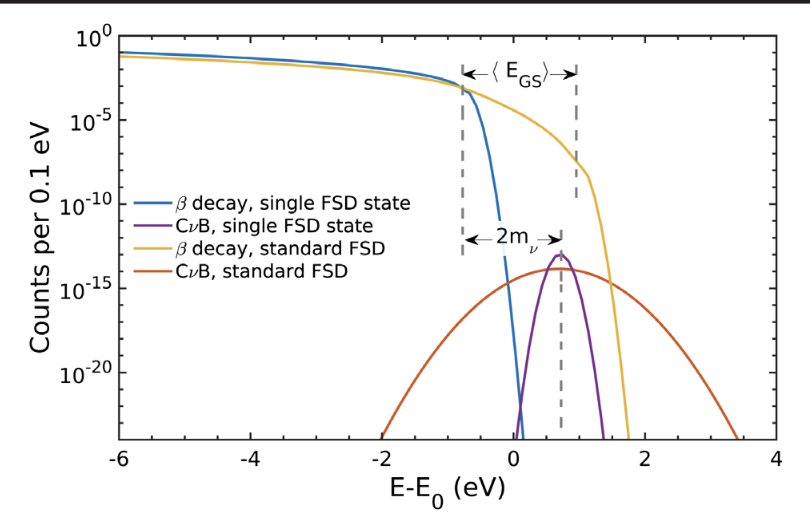
KATRIN can help to further constrain the local overdensity of relic neutrinos by looking into the capture of these particles in the tritium source. So far, only the two data campaigns have been analysed and released. An enourmous potential, and we are looking forward for the data campaigns of 1000 days of electrons coming from beta decays to be analysed!

Learn more

Liquid xenon purity monitors

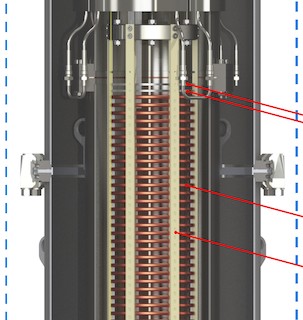
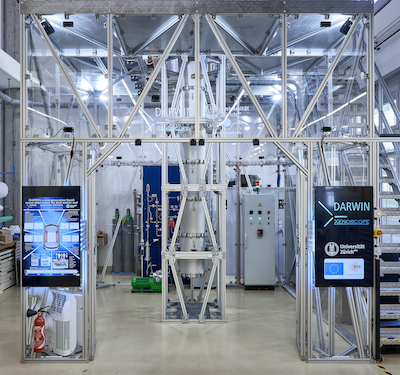
To study challenges related to the construction and operation of a multi-tonne scale detector, we have designed and constructed a vertical, full-scale demonstrator for the DARWIN experiment at the University of Zurich. Here, we present the first results from a several-months run with 343kg of xenon and electron drift lifetime and transport measurements with a 53cm tall purity monitor immersed in the cryogenic liquid. We measured the drift velocity and the longitudinal diffusion coefficient of the electron cloud in the low electric field region, and discussed its modelling in current softwared and the expectation from transport models.

Learn more

TPC design and commisioning for long electron drift, R&D for DARWIN

I worked in the design of a 2.6 m TPC at the University of Zürich. I performed electrical and mechanical simulations, designed the TPC elements, produced 2D drawings and followed closely the material selection and production of parts.

Learn more

Articles

Snapshots of life while researching dark matter and neutrinos. Content in progress.

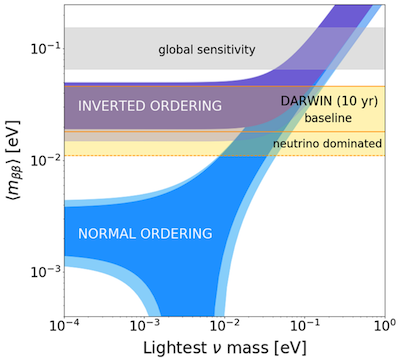
    The DARWIN observatory was a proposed next-generation experiment to search for particle dark matter and for the neutrinoless double beta decay, now part of the XLZD experiment. I worked in the simulations and the statistical inference of the sensitivity. My task consisted in modelling the background for this relative high energy proccess, investigatigate the signal model and the interaction topology in a LXe TPC, and the statistical framework using toy Monte Carlo and likelihood fits.

Teaching

  • Astroparticle Physics II: Particles and Starts: Colecturer
  • Astroparticle Physics I: Dark Matter, Colecturer
  • Astroparticle Physics II: Particles and Stars, Colecturer
  • Introduction to Cosmology: Excercise for majors in Astroparticle Physics
  • PHY111: Exercises for majors in Physics about clasical mechanics, optics, electromagnetism.
  • PHY465: Experimental Astroparticle Physics. Exercise preparation and teaching about dark matter, WIMP dark matter, axions, WIMPs in the sun.
  • PHY122/112/102: Experiments for Veterinary and Medicine students about X-rays imaging, ultrasonic imaging and electronics
  • PHY112: Experiments for majors in Physics about radiation, electromagnetism and optics
  • PHY102: Experiments for minors and majors in Physics about radiation, electromagnetism and optics.